
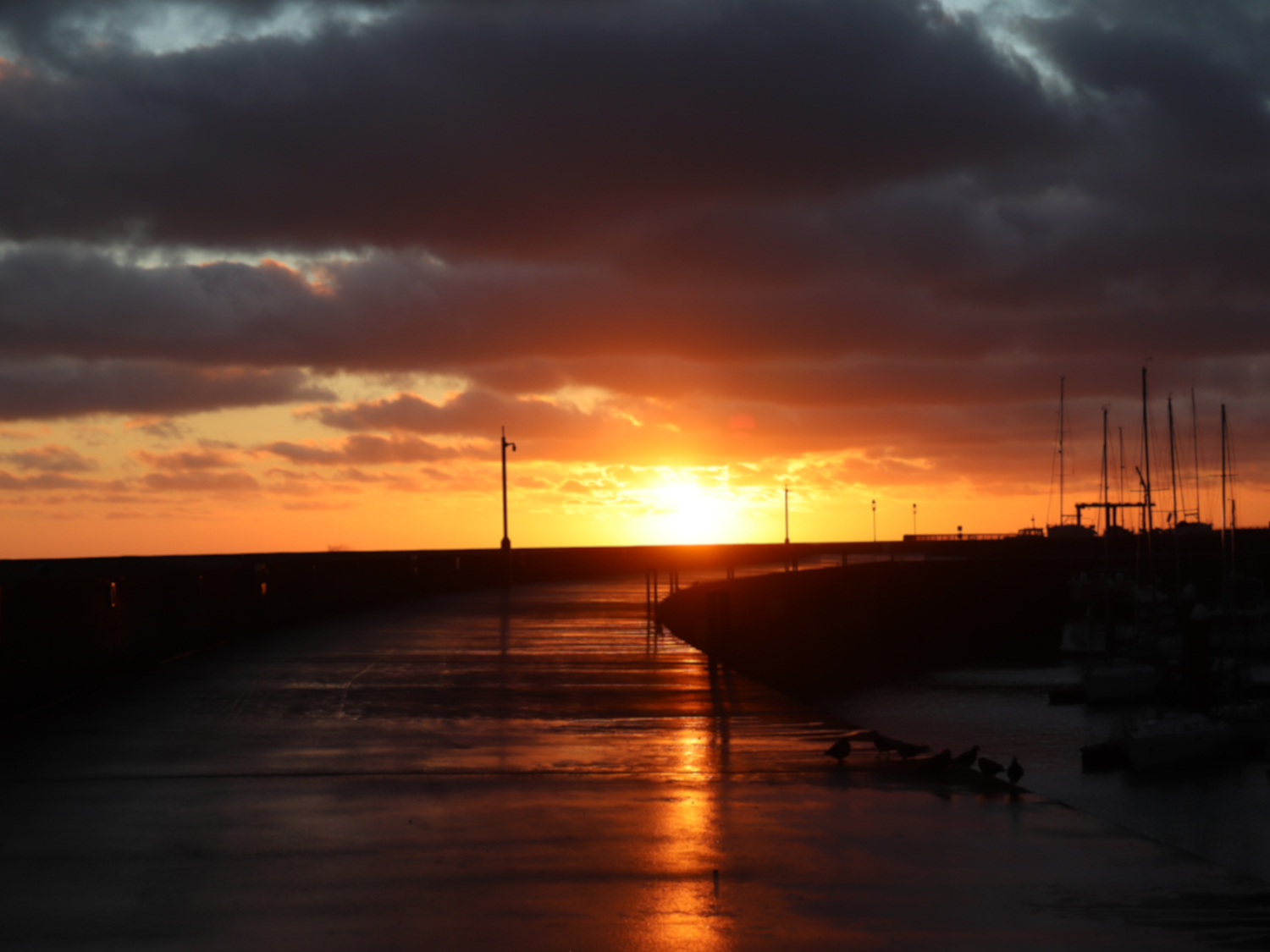
2026 has not started quietly. With all that noise can come anxiety & fear. Anxiety is often described as “living in the future without a map.” When we look toward the horizon and see only storm clouds—economic shifts, personal health, or the general “what-ifs”—our bodies react as if the catastrophe is happening right now.
Fear of the future is essentially a fear of the unknown. We try to fill the “blank space” of tomorrow with worst-case scenarios because, to our primitive brains, a scary certainty feels safer than a total mystery.
If you find yourself paralyzed by what hasn’t happened yet, here are four ways to regain your footing.
Radical Acceptance of Uncertainty
The most exhausting thing we can do is try to solve a problem that doesn’t exist yet. We spend immense mental energy trying to “guarantee” safety.
The Shift: Instead of trying to control the outcome, work on accepting the uncertainty itself. Remind yourself: “I cannot predict the future, but I can prepare my character.” You don’t need to know what the waves will look like to know that you are a person who knows how to swim.
The “Five-Year Flashback”
When we are afraid of the future, we underestimate our future selves. We imagine our current self—with all its current stresses and limitations—facing a future problem.
The Exercise: Look back at where you were five years ago. Think of a challenge you faced then that felt insurmountable.
- Did you survive it?
- Did you learn something from it?
- Did it lead to an unexpected door opening?
You have a 100% success rate of making it through your “worst days.” Your future self will be just as resilient as your past self was.
Replace “What If” with “Even If”
“What if” is the language of anxiety. It creates an infinite loop of terrifying branches.
- “What if I lose my job?”
- “What if I get sick?”
- “What if I’m alone?”
The Shift: Turn every “What if” into an “Even if.”
- “Even if I lose my job, I have the skills to find a new path and people who love me.”
- “Even if things get difficult, I will take it one day at a time.”
“Even if” acknowledges the risk but reaffirms your agency. It moves you from a victim of fate to a participant in your own life.
Think in the short term (The 24-Hour Rule)
Fear of the future thrives on long timelines. It loves to look at decades, but it falls apart when you look at minutes.
When the horizon looks too dark, stop looking at the horizon. Look at your feet. Focus exclusively on the next 24 hours. What do you need to do today to be healthy, kind, and productive? By winning the day, you are building the foundation for the future you’re so afraid of.
What scares you the most right now?
As we’ve discussed before, uncertainty isn’t just the source of fear; it’s the source of hope. If the future were perfectly predictable, there would be no room for pleasant surprises, serendipity, or sudden turns for the better. The same “unknown” that holds your fears also holds your greatest potential victories.
Do this: Write down the one future scenario that scares you most. Now, write down three things you would do to survive it if it actually happened. Notice how the fear loses its power once there is a plan.
ATTherapy offers compassionate support to help you explore issues around the topic of hope & fear of the future. ATTherapy can provide a safe space to understand yourself, heal past wounds, and develop the tools for building more secure sense of self, positivity, and fulfilling connections.